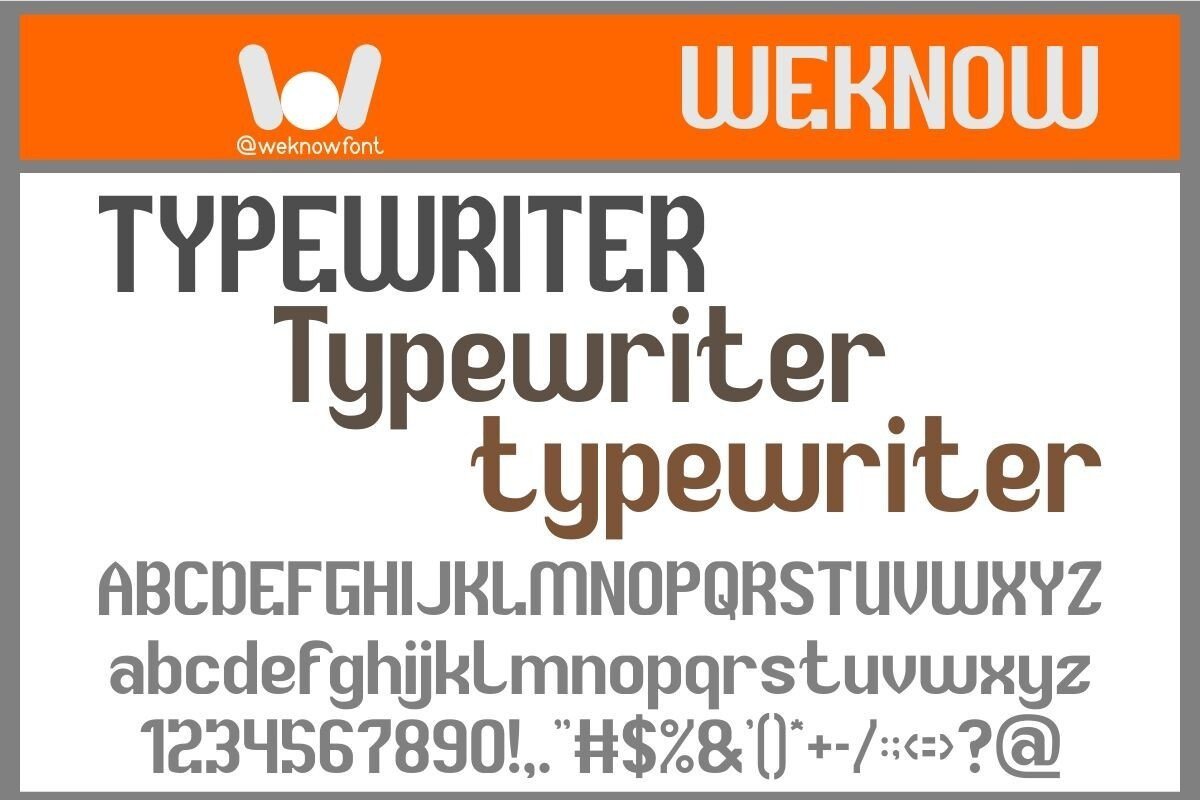
There’s a distinctive charm that only a typewriter font can deliver. It’s more than just a typeface; it's a sensory experience, evoking the rhythmic clatter of keys, the faint scent of ink, and the satisfying thud of paper against platen. But with a digital world awash in endless options, how do you go about Choosing the Perfect Typewriter Font Style that truly resonates with your brand, enhances readability, and avoids falling flat?
The answer lies in understanding the nuances of these unique fonts—their history, their inherent imperfections, and their surprising versatility. Whether you’re crafting a screenplay, designing a vintage poster, or coding a cutting-edge app, the right typewriter font can inject a layer of authenticity and character that very few other typefaces can match.
At a Glance: Your Typewriter Font Checklist
- Monospace vs. Proportional: Decide if you need strict character alignment (coding, screenplays) or a more visually balanced, classic look.
- Clean vs. Distressed: Match the level of "imperfection" to your desired brand tone—pristine for official, gritty for vintage.
- Serif vs. Sans-Serif: Understand how slab serifs impact historical feel, and how sans-serif options offer modern legibility.
- Readability First: Always test your chosen font across different sizes and contexts, especially for body text.
- Purpose-Driven Choice: Align the font's character (e.g., authoritative, playful, technical) with your project's goals.
- Pairing is Key: Consider how your typewriter font will complement other typefaces in your design.
The Enduring Allure of the Typewriter Font
Before we dive into selection, let's appreciate why these fonts remain so captivating. Typewriter fonts bridge the gap between digital efficiency and analog soul. They carry the weight of history, echoing countless stories penned, documents formalized, and ideas brought to life, one character at a time. In an increasingly polished digital landscape, their subtle imperfections and mechanical precision offer a refreshing dose of human touch and authenticity.
At their core, typewriter fonts are primarily defined by monospacing, where every character occupies the exact same horizontal space. This creates that iconic, grid-like appearance instantly recognizable to anyone who's ever used or seen an old machine. Beyond monospacing, you'll often find slab serifs—those thick, block-like extensions that anchor each character—and a commitment to mechanical precision that replicates the consistent impression of metal type. Yet, it’s the subtle imperfections—the faint misalignments, the ink splotches, the uneven stroke weights—that truly give them their character and soul. Distinctive characters like the single-story 'a' or the crucial slashed '0' (to differentiate it from 'O') further define their unique identity, particularly in technical contexts.
This blend of rigid structure and inherent imperfection is precisely what makes them so powerful. They whisper tales of urgency, precision, and craftsmanship, allowing you to inject a profound sense of character into your designs.
Deciphering the Differences: Key Characteristics of Typewriter Fonts
Choosing the right typewriter font isn't just about picking one that "looks old." It's about understanding the specific attributes that define its personality and suitability for your project.
Monospaced vs. Proportional: Precision or Balance?
This is perhaps the most fundamental distinction.
- Monospaced Fonts: Think Courier New, IBM Plex Mono, or Courier Prime. Every 'i' takes up the same horizontal space as every 'w'. This uniform grid is historically accurate to mechanical typewriters and is crucial for specific applications. It makes columns of data align perfectly, enhances code readability (especially for differentiating similar characters), and is the industry standard for screenplays. The trade-off is often reduced space efficiency and, for some, a slightly less natural reading flow in long passages.
- Proportional Typewriter Fonts: Fonts like American Typewriter offer a typewriter aesthetic but with proportional spacing, meaning characters take up only the space they need. While they capture the industrial charm and slab serifs of the genre, they forsake strict monospacing for visual balance and improved readability in more general text. If you want the look without the rigid grid, these are excellent choices.
Clean & Consistent vs. Distressed & Imperfect: Your Brand's Voice
The level of "wear and tear" replicated in a font profoundly impacts its message.
- Clean & Consistent: Fonts like Courier New, Prestige Elite, or Cutive Mono offer a crisp, uniform look. They evoke a sense of official documentation, precision, and professionalism. Ideal for reports, forms, technical manuals, or a minimalist retro vibe.
- Distressed & Imperfect: Fonts such as Special Elite, Adler Vintage Typewriter, or Trixie Vintage embrace the irregularities of ink bleeding, misaligned keys, and worn ribbons. They scream authenticity, nostalgia, and a handcrafted feel. Perfect for vintage branding, historical narratives, or projects needing a rugged, lived-in aesthetic. The key is to ensure the distressing doesn't hinder readability, especially at smaller sizes.
Serif vs. Sans-Serif: Traditional Grit or Modern Edge?
While most traditional typewriter fonts feature slab serifs, modern interpretations offer sans-serif options.
- Slab Serif: The hallmark of classic typewriter fonts. The thick, block-like serifs (e.g., in Courier Prime or Underwood Champion) contribute to their sturdy, mechanical appearance and historical accuracy. They lend a traditional, grounded feel.
- Sans-Serif: Fonts like Monaco or IBM Plex Mono (which has humanist touches despite its slab-serif roots, demonstrating versatility) offer a cleaner, more contemporary take while retaining monospacing. They're excellent for coding, digital interfaces, or designs that aim for a minimalist yet characterful tech aesthetic. Modern monospaced sans-serifs like Morequiet are perfect for blending vintage inspiration with contemporary design principles.
Beyond the Basics: Character Sets and Historical Alignment
- Supporting Characters: Always check if a font includes the special characters, accents, and glyphs you need. This is especially vital for international projects or complex technical documentation.
- Historical Period: Some fonts are specifically designed to evoke a particular era. 1942 Report immediately suggests wartime urgency, while Olivetti Typewriter Fonts bring to mind mid-century Italian elegance. Aligning your font's historical feel with your project's theme adds another layer of authenticity.
The Right Typewriter Font for the Job: Applications & Recommendations
Now that you understand the different characteristics, let's explore practical applications and specific font recommendations for various scenarios.
For Professional & Technical Precision
When clarity, structure, and adherence to industry standards are paramount, monospaced typewriter fonts are indispensable.
- Screenwriting & Playwriting: This is arguably the most famous use case. Courier New has been the long-standing standard, but Courier Prime was specifically designed for screenwriters, offering improved letter shapes and spacing for enhanced readability on screen and in print. Its free availability makes it a top choice.
- Coding & Programming: Monospaced fonts are critical here for aligning code, making syntax clear, and distinguishing characters like '0' and 'O'. IBM Plex Mono stands out for its clean lines, humanist touches, and excellent legibility. Monaco is another popular choice, designed specifically for code readability with distinct characters.
- Technical Documentation & Reports: For a clean, structured appearance in manuals, reports, or tabular data, Courier New remains a reliable, universally available choice. Prestige Elite offers a slightly narrower, more elegant alternative for official documents and forms where a touch of refinement is desired.
- Official Documents & Forms: For a no-nonsense, clear, and formal look, the consistency of fonts like Courier New or Prestige Elite makes them ideal.
For Vintage & Retro Aesthetics
If you're aiming to capture a specific historical period, inject nostalgia, or create a distressed, artisanal feel, these fonts are your allies.
- Vintage Branding & Posters: To evoke the charm of old ads or propaganda posters, go for heavily distressed options. Adler Vintage Typewriter brings ruggedness and bold strokes. Trixie Vintage offers rich texture and faithful replication of analog imperfections, adding significant character.
- Historical Narratives & Themed Designs: For projects that transport viewers back in time, choose fonts that tell a story. Underwood Champion features strong, monospaced characters with subtle imperfections, perfect for classic journalism or archival documents. 1942 Report captures gritty realism and urgency, ideal for dramatic historical designs.
- Authentic "Worn" Look: Fonts like Special Elite (inspired by Smith Corona/Remington Noiseless) with its irregular edges and ink splotches, or Graintype – Typewriter Font with its textured, grainy quality, excel at creating a genuinely aged and handcrafted feel. For a highly realistic effect, consider Not my type typewriter font which simulates uneven ink and misaligned characters.
For Personal & Handcrafted Touches
Typewriter fonts excel at conveying intimacy and a personal connection, making them perfect for less formal applications.
- Correspondence & Stationery: For invitations, personal letters, or unique greeting cards, fonts that feel less formal and more "homemade" can be delightful. Mom's Typewriter Fonts or Dreamers Typewriter (with its imperfect characters and dreamy atmosphere) offer a nostalgic, heartfelt touch.
- Scrapbooking & Journaling: These fonts add a layer of authenticity to projects that mimic physical journals or collages. Analog Typewriter (crisp with subtle imperfections) or Typewriter Inked Handwritten Typeface (a unique blend of typewritten structure with organic handwriting) can create a truly distinctive look.
For Modern & Minimalist Interpretations
Not all typewriter fonts are stuck in the past. Some offer a clean, contemporary aesthetic that subtly nods to their origins.
- Clean Digital Headings & Short Text Blocks: For a straightforward, legible monospaced look that works well in modern contexts, Cutive Mono is an excellent choice. It's clean enough for headings or code snippets without feeling overly retro.
- Tech-Inspired Branding: For brands that want to convey precision, efficiency, and a touch of vintage cool, a minimalist monospaced sans-serif like Morequiet – Modern Monospace Typewriter Sans Font can be highly effective. It offers a contemporary, clean look while retaining the distinct character spacing.
For Unique & Niche Applications
Sometimes, you need a typewriter font that brings a very specific mood or visual effect.
- Mystery & Noir: Detective – Typewriter Typeface instantly evokes the mood of old mystery novels, perfect for dramatic titles or stylized text.
- Stamp & Display Effects: For a bold, impactful, and almost rubber-stamped look, consider fonts like TypedeerMono – Typewriter Stamp Display Font or Gelato Typewriter Minimal Vintage Stamp Font. These are great for powerful statements or distinct branding elements.
- Charming & Quirky: If you need something with a bit of playful irregularity, fonts like Trioskay – Typewriter Font or Mencary A Old Typewriter Font bring a handcrafted, whimsical charm.
When to Think Twice: Pitfalls to Avoid
While versatile, typewriter fonts aren't a universal solution. Knowing when to avoid them is as crucial as knowing when to use them.
Long-Form Body Text
This is the most common pitfall. The monospaced nature of many typewriter fonts can reduce space efficiency and make long passages visually taxing, potentially leading to reader fatigue. While fine for short blocks of text or specific design elements, avoid them for entire articles or book chapters where readability over extended periods is key. Clean, proportionally-spaced serifs or sans-serifs are generally better choices for body copy.
Ultra-Modern Designs Without Context
If your brand or project is strictly modern, sleek, and forward-thinking with no historical or nostalgic reference, a typewriter font can feel out of place and jarring. It might contradict your desired aesthetic, making the design feel disjointed rather than cohesive.
Situations Demanding High Space Efficiency
Because every character, including thin ones like 'i' and 'l', occupies the same space as wide ones like 'm' and 'w', monospaced fonts inherently take up more room. If you have strict space constraints or need to fit a lot of text into a small area, a proportionally-spaced font will always be more efficient.
Very Small Sizes
Heavily distressed or intricate typewriter fonts can become illegible at very small sizes. The subtle imperfections, which add character at larger scales, can turn into visual noise, making text blurry and difficult to read. Always test your chosen font across the range of sizes you intend to use it for.
Master the Mix: Pairing Typewriter Fonts for Impact
A single font rarely carries an entire design. How you pair your typewriter font with others can make or break your project's visual harmony and readability.
Create Contrast with Clean Sans-Serifs
This is a go-to strategy. A robust, characterful typewriter font (perhaps for headings or accents) can be beautifully balanced by a clean, geometric sans-serif for body text or supporting information. Think Futura, Helvetica, or Open Sans alongside Special Elite or Courier Prime. The sans-serif offers modern readability, allowing the typewriter font's personality to shine without overwhelming the viewer. This pairing is excellent for striking a balance between vintage charm and contemporary appeal.
Complement with Vintage Serifs
If you're aiming for a fully immersive historical theme, pair your typewriter font with other vintage serifs from a similar era. Fonts like Clarendon or Baskerville can echo the formality and historical weight, creating a cohesive, authentic aesthetic. This strategy works well for historical documents, themed branding, or period-specific designs.
Balance with Flowing Script Fonts
For designs that blend formal and personal, or robust and delicate, a script font can add an elegant counterpoint. Imagine a wedding invitation where the main names are in a beautiful script, while the details are presented in a refined typewriter font like Remington Noiseless. This creates an interesting tension and sophisticated depth.
Establish Hierarchy with Weight Variations
Within the same font family (if available), or by choosing complementary fonts, use weight variations (bold, light, regular) to create a clear typographic hierarchy. For example, a bold typewriter font for a headline, a regular weight for a sub-headline, and a cleaner sans-serif for body text. This guides the reader's eye and improves overall comprehension. If you're looking for more comprehensive guidance, consider diving into expert font pairing tips.
Finding Your Perfect Match: A Decision Framework
Ready to make your choice? Follow these steps to narrow down the options and confidently select the ideal typewriter font style.
Step 1: Define Your Project's Purpose and Tone
Before you even look at fonts, clearly articulate:
- What is the core message? Is it precision, nostalgia, urgency, elegance, or something else?
- Who is your audience? What aesthetic will resonate with them?
- What is the desired emotional response? Do you want to evoke trust, wonder, professionalism, or playfulness?
A precise, clean monospaced font like IBM Plex Mono speaks to different intentions than a rugged, distressed one like Adler Vintage Typewriter. This initial clarity will filter out many unsuitable options.
Step 2: Consider Readability Requirements
Be honest about how much text your typewriter font will carry.
- Headlines & Short Statements: You have more leeway here. Distressed, decorative, or highly unique fonts (e.g., Detective – Typewriter Typeface, Trixie Vintage) can shine.
- Subheadings & Short Paragraphs: You'll need a balance of character and legibility. Fonts like Cutive Mono, Analog Typewriter, or Notenic – Typewriter Typeface often work well.
- Code & Technical Content: Strict monospacing and clear character differentiation (e.g., slashed '0') are non-negotiable. IBM Plex Mono, Courier Prime, and Monaco are strong contenders.
- Body Text (Rarely Recommended): If you absolutely must use it for body text (e.g., for a very specific, short story simulation), prioritize clean, less-distressed monospaced fonts designed for readability like Courier Prime or a very clean version of Courier New. Test exhaustively.
Step 3: Test Drive Your Top Contenders
Don't just pick from a thumbnail. Download or activate your chosen fonts and test them in your actual design context.
- Across Sizes: How does it look at 10pt? 24pt? 72pt? Do the imperfections become illegible or too dominant at certain scales?
- On Different Backgrounds: Does it stand out on your chosen color or texture?
- With Other Elements: How does it interact with images, icons, or other fonts you plan to use?
- Compatibility: Ensure the font displays correctly across different browsers, operating systems, and design software. Check out general typography best practices for more testing insights.
Step 4: Verify Character Support and Licensing
Before committing, a quick check can save you headaches.
- Full Character Set: Does it support all the punctuation, symbols, and accented characters you need? This is particularly important for multi-language projects.
- Licensing: Ensure you have the appropriate license for your intended use (personal, commercial, web, print). Many excellent fonts, like Courier Prime, are free for commercial use, but always double-check.
By meticulously working through these steps, you'll ensure that your chosen typewriter font isn't just aesthetically pleasing, but also functionally perfect for your project.
Frequently Asked Questions About Typewriter Fonts
Let’s clear up some common queries.
Are all typewriter fonts monospaced?
No, while the vast majority of classic and technical typewriter fonts are monospaced (e.g., Courier New, IBM Plex Mono), there are notable exceptions. American Typewriter, for instance, is a popular font that captures the look and feel of a typewriter with its slab serifs and industrial charm, but it uses proportional spacing for improved readability in general text. Always check a font's specifications if monospacing is a critical requirement.
Can I use a typewriter font for a modern brand?
Absolutely! Typewriter fonts can inject a unique blend of heritage and precision into a modern brand, especially if it relates to technology, craft, storytelling, or authenticity. The key is to choose the right style and pair it effectively. A clean, minimalist monospaced sans-serif like Morequiet or IBM Plex Mono can offer a fresh, contemporary feel that subtly nods to the past without feeling dated. Consider using it for headlines, accent text, or code snippets, paired with a modern sans-serif for body copy, to create an appealing contrast. You can also explore the latest vintage design trends to see how brands are successfully blending old and new.
What's the difference between Courier New and Courier Prime?
Courier New is the ubiquitous, system-default monospaced font, often seen in screenplays and technical documents. It's clean, functional, but can sometimes feel a bit generic. Courier Prime was specifically designed as an improvement for screenwriters. It features refined letterforms, better spacing, and enhanced readability at various sizes, making it easier on the eyes during long writing sessions. It offers a more polished and professional aesthetic while retaining the core characteristics of Courier. Best of all, Courier Prime is often free for commercial use. If you're in screenwriting, exploring popular screenwriting software will likely lead you to Courier Prime as a top recommendation.
Are free typewriter fonts good quality?
Many high-quality typewriter fonts are available for free, especially for personal use, and often for commercial use with proper attribution or a permissive license. Fonts like Courier Prime, Special Elite, and Cutive Mono are excellent examples of free options that deliver professional results. However, quality can vary greatly among free fonts. Always check:
- Completeness of character set: Does it have all the glyphs you need?
- Kerning and spacing: Does it look balanced, or are there awkward gaps?
- Licensing: Is it genuinely free for your intended use?
- Readability: How does it perform at different sizes?
A thorough test drive is always recommended.
Bringing Your Vision to Life
Choosing the perfect typewriter font style is less about finding a single "best" option and more about aligning a font's inherent character with your project's unique needs. From the rigid precision of monospaced code fonts to the evocative imperfections of distressed vintage type, each style offers a distinct personality.
By understanding the key characteristics—monospacing, serif style, level of distress—and considering your project's purpose, audience, and readability requirements, you can confidently navigate the rich landscape of typewriter fonts. Experiment with pairings, test across contexts, and don't be afraid to let your chosen font tell a story.
In a world increasingly dominated by the digital, the subtle analog echoes of a typewriter font can provide a powerful, humanizing touch. It's an invitation to authenticity, a nod to history, and a testament to the enduring craft of written communication. Ready to create your own? You can even create typewriter fonts online to experiment with custom looks and immediate previews, bringing your vision to life one character at a time.