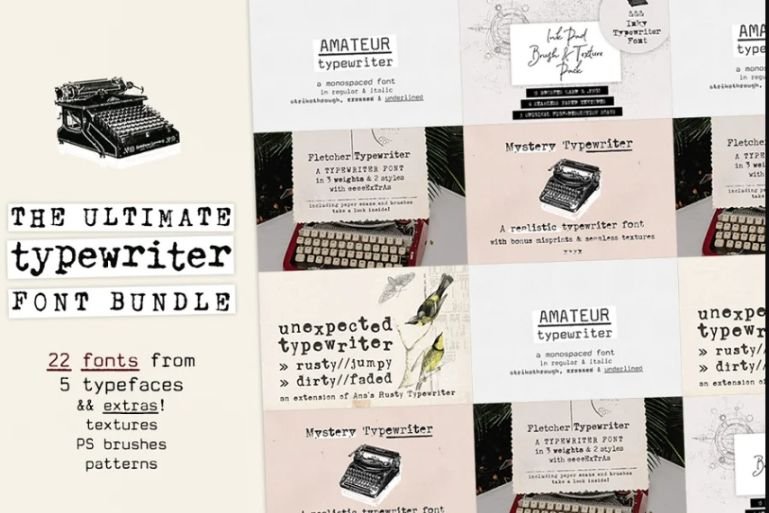
The rhythmic clack of keys, the satisfying thud of the carriage return, the imperfect beauty of ink on paper – these are the tactile memories invoked by typewriter fonts. In a hyper-digital world, it might seem counterintuitive, but these charmingly anachronistic typefaces are experiencing a powerful resurgence. By 2026, designers are rediscovering the potent character of typewriter fonts, not just for nostalgia, but for injecting genuine personality and an undeniable human touch into everything from indie coffee shop menus to sleek digital interfaces.
This isn't just a fleeting trend; it's a recognition of the unique storytelling power inherent in these fonts. If you're looking to infuse your projects with authenticity, a dash of retro cool, or a whisper of handcrafted charm, mastering the creative applications for typewriter fonts is an essential skill. They offer a refreshing counterpoint to the often-sterile perfection of modern digital type, bridging the analog past with a vibrant digital future.
At a Glance: Key Takeaways for Typewriter Font Mastery
- More Than Nostalgia: Typewriter fonts offer unique character, authenticity, and a human touch for modern digital designs.
- Distinctive Features: Defined by monospaced characters, subtle mechanical imperfections, and often serif structures.
- Prime Applications: Excel in screenwriting, retro branding, personal stationery, editorial accents, and technical content.
- When to Hold Back: Avoid for long body text, ultra-modern aesthetics, or very small sizes where legibility suffers.
- Smart Selection: Choose fonts based on historical period, level of distressing, and specific readability needs.
- Harmonious Pairing: Create visual interest by pairing them with clean sans serifs, complementary vintage serifs, or even flowing scripts.
- Modern Adaptations: Look beyond strictly monospaced options for "typewriter-inspired" fonts that offer better readability while retaining the aesthetic.
The Enduring Allure of the Typewriter Font in a Digital Age
Why are designers, seemingly paradoxically, turning to typefaces inspired by a bygone technology? The answer lies in the quest for authenticity. In an era dominated by slick, often impersonal digital aesthetics, the inherent "imperfection" of a typewriter font acts as a powerful antidote. It whispers stories of handwritten notes, classic literature, old film scripts, and earnest correspondence. This deeply human connection is precisely why the creative applications for typewriter fonts are expanding rapidly in 2026, finding a place in unexpected corners of modern design.
These fonts speak to a desire for tactility and genuineness, adding a layer of depth and narrative to designs that might otherwise feel flat. They offer a visual texture that instantly communicates a certain tone—whether it's the gritty realism of a documentary, the intimate charm of a wedding invitation, or the curated cool of an artisan brand.
Unpacking the Typewriter Font's DNA: What Makes Them Tick?
To truly harness the power of typewriter fonts, it's crucial to understand their fundamental characteristics. These aren't just "old-looking" fonts; they possess distinct attributes that dictate their impact and best uses.
The Defining Traits of an Authentic Typewriter Font
- Monospaced Architecture: This is perhaps their most defining feature. Every character—whether it's a wide 'W' or a narrow 'i'—occupies the exact same horizontal space. This rigid grid was a limitation of mechanical typewriters, where each character hammer had to fit into a standardized slot. The result is a distinctive, rhythmic spacing that can feel both orderly and slightly industrial.
- Mechanical Imperfections: The charm often lies in the flaws. Many authentic typewriter fonts artfully incorporate subtle variations, such as slight shifts in the baseline, uneven ink distribution, or differences in the impression strength. These details mimic the physical quirks of a real typewriter, adding unparalleled realism and character.
- Distinctive Characters: Look closely, and you'll often find unique character forms. This might include a single-story lowercase 'a' (where the top loop is connected), straight quotation marks (rather than curly "smart quotes"), and a slashed '0' (zero) to clearly differentiate it from the uppercase 'O'. These subtle cues further reinforce the font's heritage.
- Serif Structure: While not universal, many traditional typewriter fonts feature small serifs. These were not just for aesthetics; they were practical elements designed to ensure clearer and sharper impressions on paper, especially important when ink ribbons might not be perfectly fresh.
Understanding these characteristics is the first step toward strategically applying them in your designs.
Where Typewriter Fonts Shine Brightest: Unlocking Creative Potential
The inherent personality of typewriter fonts makes them incredibly versatile for specific design challenges. Here's where they truly come alive:
1. Scriptwriting & Screenplays: The Industry Standard
This is perhaps the most iconic application. Typewriter fonts, particularly Courier and its variants, are the undisputed standard for screenplay formatting. The monospaced nature isn't just traditional; it's functional. It allows for precise page-to-time estimates (one page of script typically equals one minute of screen time), a critical tool for filmmakers.
- Example: Imagine a new script using a font like Courier Prime or IBM Plex Mono. It instantly conveys professionalism and adherence to industry norms.
- Key takeaway: For any narrative format where timing and a classic feel are paramount, a typewriter font is non-negotiable.
2. Retro & Vintage Branding: Instantly Transporting Your Audience
Want to evoke the golden age of cinema, the grittiness of a detective novel, or the honest craftsmanship of an artisanal product? Typewriter fonts are your time machine. They instantly establish period authenticity, whether for a 1920s-inspired speakeasy, a 1950s diner, or a brand that champions handmade goods.
- Example: A craft brewery branding its new stout with Trixie or Special Elite immediately suggests a rich history and meticulous process. A coffee shop might use P22 Typewriter on its menu to cultivate an indie, artisanal vibe.
- Application: Posters, packaging, logos, event invitations, website headers for vintage-themed businesses.
3. Personal Correspondence & Stationery: A Touch of Human Connection
In a world of impersonal emails, a note or invitation using a typewriter font stands out. It adds a personal, handcrafted touch, suggesting a deliberate effort that feels intimate and thoughtful. This is why they're a popular choice for wedding invitations, personal letters, or custom notecards.
- Example: A wedding invitation designed with Dreamers Typewriter or Analog Typewriter conveys a sense of timeless romance and personal care, setting a unique tone for the special day.
- Key takeaway: For any communication meant to feel warm, personal, or slightly nostalgic, these fonts offer a genuine alternative.
4. Editorial Design: Creating Visual Distinction
In magazines, newspapers, or online articles, typewriter fonts can be powerful tools for hierarchy and visual interest. They're excellent for setting off pull quotes, sidebars, captions, or any textual element that needs to feel distinct from the main body copy.
- Example: A lifestyle magazine might use Notenic – Typewriter Typeface for an author's bio or a quirky factoid, drawing the reader's eye and adding a layer of character without overwhelming the page.
- Application: Magazine layouts, blog post callouts, infographic annotations, book chapter headings.
5. Code & Technical Content: Precision and Clarity
For developers, programmers, and anyone dealing with technical documentation, the monospaced nature of these fonts is a blessing. It ensures that every character aligns perfectly, making code easier to read, debug, and understand. Fonts like IBM Plex Mono or Andale Mono are designed specifically for this purpose, offering excellent legibility.
- Example: Displaying code snippets on a tech blog or within a development platform benefits immensely from a monospaced font, ensuring that indentation and syntax are clear and unambiguous.
- Key takeaway: Precision and alignment are paramount here, making monospaced fonts the default choice.
6. Indie & Artisan Projects: Cultivating a Unique Vibe
From small-batch product labels to quirky zines and independent film titles, typewriter fonts lend an immediate sense of authenticity and a "crafted, not mass-produced" aesthetic. They suggest a story behind the product or project, appealing to audiences who value individuality.
- Example: The menu for an indie coffee shop, handwritten-style, but using a perfectly distressed typewriter font like Bygonest – Old Typewriter Font, reinforces its unique, non-corporate identity and artisanal approach.
- Application: Product labels, small business branding, art project titles, event flyers, zines.
Navigating the Nuances: When to Steer Clear
While immensely versatile, typewriter fonts aren't a universal solution. Knowing when not to use them is just as important as knowing when to deploy them.
- Long-Form Body Text: Due to their monospaced layout, typewriter fonts are less space-efficient and can be fatiguing to read in large blocks of text. The uniform spacing can disrupt natural reading flow, especially compared to proportional fonts designed for continuous reading.
- Ultra-Modern Designs: If your goal is sleek, futuristic, or aggressively contemporary, a typewriter font can introduce unintended vintage associations that clash with your overall aesthetic.
- Space-Efficient Layouts: Their equal character width means they consume more horizontal space than proportional fonts. If you have limited real estate, a typewriter font might force awkward line breaks or require reducing font size, impacting readability.
- Very Small Sizes: The distinctive details and subtle imperfections that make these fonts charming can become illegible at very small point sizes. Baseline shifts or ink distress might look like artifacts rather than intentional character.
- Highly Formal Documents: While they can add personality to personal correspondence, they might be inappropriate for highly formal business documents or academic papers, where a more neutral, professional typeface is usually expected.
Mastering the Art of Selection: Choosing the Perfect Typewriter Font
With a vast array of typewriter fonts available, how do you pick the right one for your project? It comes down to matching the font's nuanced characteristics to your design's specific needs and desired emotional impact.
- Consider the Historical Period: Typewriters evolved, and so did their letterforms and mechanical output. Do you need a crisp, almost pristine look from the 1950s, or something grittier and more worn, perhaps evoking earlier 20th-century documents? Wolfsmith – Classic Vintage Typewriter Serif Font might suit a more refined, older feel, while Old Typewriter Font offers a more weathered look.
- Assess the Level of Distressing: Typewriter fonts range from impeccably clean to heavily distressed, mimicking smudges, ink bleed, and paper texture.
- Crisp/Clean: Choose fonts like Notenic – Typewriter Typeface or Hyper Writer – Typerwriter Font for a subtle nod to the aesthetic without sacrificing pristine clarity.
- Moderately Distressed: Fonts like Special Elite or Graintype – Typewriter Font offer a balanced aged look.
- Heavily Distressed: Opt for Trixie or Not my type typewriter font for maximum authenticity and rugged character, ideal for truly vintage or grunge aesthetics.
- Prioritize Readability Requirements: For short bursts of text or headlines, you can afford more character. For anything more substantial, prioritize clearer letterforms and moderate distressing. Fonts designed specifically for screenplays, like Courier Prime, are optimized for on-screen legibility over long periods.
- Verify Supporting Characters: Does your project require specific accents, special characters, or obscure glyphs? Always check the font's character set to ensure it supports all necessary elements. This is especially crucial for international projects or technical documentation.
Harmony in Design: Pairing Typewriter Fonts Effectively
A typewriter font rarely works in isolation. Its unique personality often demands a complementary typeface to create visual balance and hierarchy. Thoughtful pairing elevates your design from good to great.
- Contrast with Clean Sans Serifs: This is a classic and highly effective pairing. The structured, slightly informal nature of a typewriter font beautifully contrasts with the clean, geometric lines of a modern sans serif (e.g., Futura, Helvetica, Gotham, Open Sans). The sans serif provides a neutral ground, allowing the typewriter font to pop.
- Example: Use TheCase – Typewriter Font for a headline, and a modern sans serif for the body text of an event poster.
- Complement with Vintage Serifs: For designs deeply rooted in historical themes, pair a typewriter font with a serif font from the same era. This creates a cohesive, rich, and historically accurate feel (e.g., Clarendon, Century Schoolbook, Baskerville).
- Example: A historical novel cover might use Untold History – Typewriter Font for subheadings, with a classic serif like Garamond for the main title.
- Balance with Script Fonts: This creates an interesting tension, suitable for designs that blend formal and personal elements. The rigid, mechanical feel of the typewriter font provides an anchor for the fluid, expressive nature of a script font.
- Example: A wedding invitation might feature the couple's names in a delicate script, with event details set in a clean typewriter font like Frontype – Typewriter Typeface.
- Hierarchy with Weight Variations: Within a single typewriter font family (if available), use different weights (light, regular, bold) to create clear typographic hierarchy. This keeps the aesthetic consistent while guiding the reader's eye.
- Example: A bold typewriter font for a main heading, a regular weight for a subheading, and a lighter weight for an accent.
A Typographic Toolkit: Popular Typewriter Fonts for Your Next Project
The world of typewriter fonts is vast, with many options catering to specific moods and functionalities. Here's a curated selection, helping you navigate the choices:
For Authentic & Classic Appeal
- Courier: The quintessential typewriter font. Often seen in screenplays, it’s clean, legible, and immediately recognizable. Courier Prime is a refined version optimized for screen use.
- American Typewriter (Monotype): A slightly bolder, more robust take on the classic, known for its strong presence.
- Special Elite: Often pre-installed on many systems, offering a slightly worn, authentic feel.
For Weathered & Vintage Character
- Trixie: Famous for its highly distressed, grunge aesthetic, Trixie is perfect for a truly worn, ink-stained look.
- JH Typewriter, Travelling Typewriter, Old Typewriter Font, Bygonest – Old Typewriter Font, Mencary A Old Typewriter Font: These offer varying degrees of natural imperfections, textures, and grit, ideal for conveying age and history.
- Graintype – Typewriter Font: Known for its textured, grainy feel, mimicking an older printing process.
For Screenplays & Technical Precision
- Courier Prime (Quote-Unquote Fonts): Specifically designed for screenwriting, offering precise character spacing for timing estimates.
- IBM Plex Mono (IBM): A modern, highly legible monospaced font excellent for code and technical content, available with multiple weights.
- Andale Mono (Monotype): Another solid choice for coding and clean technical displays.
For Charming & Unique Aesthetics
- Dreamers Typewriter: A charming serif option that brings a whimsical, yet authentic, feel.
- Analog Typewriter: Offers a realistic serif structure with a balanced, readable quality.
- Feedbacker Typewriter: A versatile serif that balances classic appeal with modern usability.
- Detective – Typewriter Typeface: Evokes mystery and intrigue, perfect for narrative projects.
- TheCase – Typewriter Font: Bold and distinctive, making a strong statement.
- Untold History – Typewriter Font: Ideal for conveying timeless narratives.
For Clean & Modern Interpretations
- Notenic – Typewriter Typeface: A cleaner, more legible option for those who want the aesthetic without heavy distressing.
- Hyper Writer – Typewriter Font: A clean, modern take on the typewriter aesthetic, often with a more refined feel.
- Morequiet – Modern Monospace Typewriter Sans Font: A contemporary monospace sans, blending the structure of a typewriter font with modern clarity.
- Perfect Thoughts Font: Offers a refined and modern clarity while retaining the typewriter feel.
For Textured, Handwritten & Stamp Effects
- Typewriter Inked Handwritten Typeface: Blends the look of typewritten text with subtle handwritten ink textures.
- TypedeerMono – Typewriter Stamp Display Font: A bold, monospaced font designed to look like a stamped impression.
- Inktype: Specifically designed to mimic the imperfect, inked-ribbon look of a real typewriter.
Many of these fonts, including options from P22 Type Foundry, Bold Monday, Monotype, and Adobe Originals, are available through platforms like Adobe Fonts, making them accessible to a wide range of designers.
Beyond the Basics: Modern Adaptations and Future Trends
While authentic typewriter fonts are strictly monospaced, the enduring popularity of the aesthetic has led to modern "typewriter-inspired" fonts that sometimes cleverly use proportional spacing. These hybrid fonts aim to capture the charm and character of a typewriter while improving readability for longer texts, effectively bridging the gap between analog charm and modern usability.
The 2026 resurgence isn't just about recreating the past; it's about reinterpreting it. Designers are increasingly experimenting with variable typewriter fonts, offering unprecedented control over distressing, weight, and character width, allowing for dynamic, expressive type that retains its mechanical heart.
Bringing Your Vision to Life: Practical Tips for Implementation
Ready to put these typefaces to work? Here are some actionable tips to ensure your typewriter font applications hit the mark:
- Start with the "Why": Before choosing a font, ask what emotion or message you want to convey. Is it nostalgia, professionalism, gritty realism, or personal charm? Let this guide your selection.
- Test for Legibility: Always test your chosen font at your intended size and on your target medium (screen or print). What looks great as a headline might be illegible in small print or on a mobile device.
- Use Hierarchy Judiciously: Because typewriter fonts are distinctive, they naturally draw attention. Use them strategically for headings, subheadings, pull quotes, or short bursts of text, allowing them to provide visual interest without overwhelming the design.
- Embrace the Imperfections (When Appropriate): If you're going for an authentic, vintage look, don't shy away from fonts that include subtle "flaws." These are features, not bugs, and add to the realism.
- Consider an Online typewriter font generator: These tools can be a fantastic way to quickly experiment with different styles and effects, giving you a visual preview before committing to a specific font or design.
- Experiment with Color and Texture: Typewriter fonts look fantastic against textured backgrounds, such as faded paper, cardstock, or even subtle grunge overlays. Playing with muted color palettes can further enhance their vintage appeal.
- Explore Pairing Options: Don't let your typewriter font stand alone. Experiment with the pairing strategies discussed earlier to create balanced and dynamic layouts. Remember, contrast is key to making the typewriter font shine.
Common Questions & Misconceptions About Typewriter Fonts
Are all typewriter fonts monospaced?
Traditionally, yes. Mechanical typewriters produced monospaced text. However, some modern "typewriter-inspired" fonts exist that use proportional spacing to improve readability while maintaining the aesthetic. Always check the font's specifications if monospacing is a functional requirement (like for code or screenplays).
Can I use typewriter fonts for a modern website?
Absolutely! When used thoughtfully, they can add character and a unique brand voice to a modern website. They work well for headlines, navigational elements, or call-to-action buttons, especially if your brand leans into a handcrafted, indie, or retro-tech aesthetic. Just avoid using them for long blocks of body text for readability reasons.
What's the difference between "Courier" and "Courier New"?
"Courier" is the original type design, known for its distinct character. "Courier New" is a re-drawn version, often included with operating systems like Windows. While similar, there can be subtle differences in their metrics and rendering, with some designers preferring the visual nuance of the original Courier or specialized versions like Courier Prime.
Are typewriter fonts accessible for all users?
For users with certain reading disabilities, monospaced fonts can sometimes be easier to read due to their consistent letter spacing, which prevents letters from blending. However, their lower space efficiency and often narrower character forms can also be a challenge for extended reading. As with any font choice, consider your audience and test for accessibility if it's a primary concern.
Crafting Narratives, One Character at a Time
Typewriter fonts are far more than a nostalgic nod to the past. They are powerful tools in a designer's arsenal, capable of conveying authenticity, character, and a deeply human touch in an increasingly digital world. By understanding their unique characteristics, knowing where they excel (and where they don't), and mastering the art of selection and pairing, you can harness their enduring appeal to craft compelling visual narratives that truly resonate.
So, next time you're facing a design challenge, consider the humble yet mighty typewriter font. It might just be the unexpected character your project needs to tell its story with unforgettable charm and authenticity.