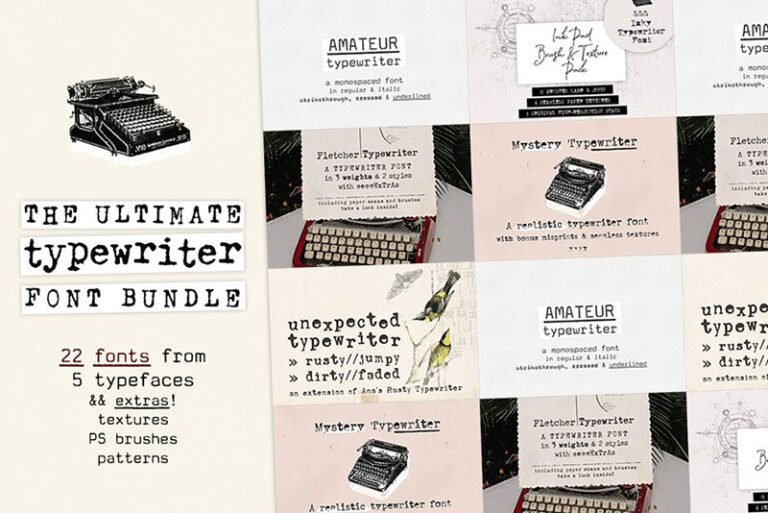
There’s a certain magic to the clack and thwack of an old-school typewriter. It's the sound of intention, of words being hammered onto paper with a satisfying permanence. In our hyper-digital age, this analog charm hasn't faded; if anything, it’s only grown stronger. That's why designers, writers, and creatives are constantly searching for the perfect digital echoes of this bygone era. If you’re looking to infuse your projects with that authentic, retro feel, understanding where to find the best Free and Premium Typewriter Fonts for Download is your first crucial step.
Forget generic, sterile text. A good typewriter font brings character, history, and a touch of human imperfection to your designs, whether it's for a novel cover, a branding project, or just a cool social media graphic. But how do you navigate the vast ocean of options out there? Which ones are truly free, and when is it worth investing in a premium option? Let's dive in.
At a Glance: Key Takeaways
- Typewriter fonts offer a unique blend of nostalgia, authenticity, and distinct character for various creative projects.
- Free fonts like Courier, Addict, and Bohemian Typewriter are excellent for personal projects or budget-conscious commercial use, but always check their specific licenses.
- Premium fonts often provide superior design quality, a wider range of weights and styles, extensive language support, and dedicated customer service—ideal for professional applications.
- Licensing is crucial: Understand the difference between personal and commercial use licenses, and specific usages like desktop, web, or app.
- Look beyond aesthetics: Consider readability, character set, and the overall "feel" a font brings to your specific project.
- You can even explore tools to Generate typewriter fonts for unique effects and customizations.
The Enduring Allure of the Typewriter Aesthetic
Before we start downloading, let's appreciate why typewriter fonts resonate so deeply. They speak of a time when communication was tangible, when drafts had carbon copies, and every letter struck the page with force. This isn't just nostalgia; it's about conveying specific qualities:
- Authenticity: Typewriter fonts often carry subtle imperfections—ink bleeds, uneven baselines, slightly worn characters—that lend a handcrafted, "real" feel.
- Formality with a Twist: While typewriters were standard office equipment, their digital counterparts evoke a certain old-world gravitas, but one that's approachable rather than stiff. Think vintage documents, espionage thrillers, or academic papers with character.
- Storytelling: For writers and designers, these fonts are a shortcut to narrative. They instantly transport the viewer to a different era or mood, suggesting secret correspondence, historical accounts, or a creative's raw manuscript.
- Distinctiveness: In a sea of sans-serifs and modern serifs, a well-chosen typewriter font stands out, making your content memorable.
From a retro-themed website to a bespoke wedding invitation, a carefully selected typewriter font can transform a project from ordinary to extraordinary.
What Makes a Typewriter Font, Well, Typewriter?
While the term "typewriter font" is broad, most share a few defining characteristics that distinguish them from other fixed-width (monospaced) or serif fonts:
- Monospaced Nature: Historically, typewriters allotted the same horizontal space to every character (an "i" took up as much space as an "m"). This creates a distinct, somewhat blocky appearance. While many digital typewriter fonts are still monospaced, some modern interpretations break this rule for improved readability or aesthetic reasons.
- Serifs (Often Slab or Monoline): Many traditional typewriter fonts feature robust, often unbracketed (slab) serifs, or simple monoline serifs. These contribute to their sturdy, industrial look.
- Imperfections & Distress: The beauty of a typewriter font often lies in its flaws. Digital versions emulate ink blotches, worn edges, slightly misaligned characters, or varying pressure marks, giving them a distressed or "grungy" texture.
- Specific Character Shapes: Certain letters and numbers often have unique forms in typewriter fonts, such as a capital "I" with serifs top and bottom, or a capital "Q" with a distinct tail.
Understanding these traits helps you discern the subtle differences between fonts and choose one that perfectly matches your vision.
Diving into Free Typewriter Fonts: Your Budget-Friendly Starting Point
For many projects, especially personal ones, hobbyist endeavors, or when you're just experimenting, free typewriter fonts are an absolute godsend. They offer a vast landscape of styles, from clean and classic to gritty and distressed, without costing you a dime.
Where to Find Them
Websites like 1001freefonts.com and 1001fontsfree.com are treasure troves, categorizing thousands of fonts, including a dedicated section for typewriters. Other platforms like Dafont, Font Squirrel (which often curates free-for-commercial-use fonts), and Google Fonts (though fewer dedicated typewriter styles there) are also excellent resources.
Popular Free Typewriter Fonts to Explore
You'll encounter a mix of timeless classics and unique independent designs. Here are a few notable examples, many of which draw inspiration from real typewriter models or popular culture:
- Courier: The quintessential typewriter font, born from IBM. It's clean, highly readable, and available in many system default font libraries, making it a reliable choice.
- Addict / Adler: These often lean into a slightly more distressed or characterful look than pure Courier, hinting at older, well-used machines.
- Andreas Typewriter: A popular option for a clear, legible yet authentic typewriter feel.
- Bohemian typewriter (by Lukas Krakora): This one often offers a charmingly imperfect, somewhat quirky take, perfect for creative, less formal projects.
- CarbonType (by Vic Fieger): Known for its solid, almost stencil-like appearance, giving a robust, industrial vibe.
- Ghostwriter (by PizzaDude): As the name suggests, this often has a slightly worn, spectral quality, great for evocative or mysterious themes.
- Harting (by David Rakowski): A classic distressed typewriter font, widely used for its authentic, imperfect look.
- Impact label (by Michael Tension): While not purely a typewriter font, it often shares the monospaced, robust feel, evoking old label makers or industrial printing.
- Fluoxetine (by Apostrophic Labs): Often offers a subtly distressed, slightly uneven texture that speaks of older, well-used machines without being overly grungy.
Navigating Free Font Licenses: The Critical Fine Print
This is where "free" gets nuanced. A font being "free to download" doesn't automatically mean "free for all uses." Always, always check the license.
- Personal Use Only: Many free fonts are released solely for personal projects—things you do for yourself, that won't generate income. Using these for a client's logo or a product you sell is a breach of license and could lead to legal issues.
- Free for Commercial Use: These are the holy grail for designers on a budget. They allow you to use the font in projects that generate revenue (client work, products, ads, etc.). Even then, sometimes there are stipulations (e.g., no embedding in software).
- Donationware: The creator suggests a donation if you find the font useful or use it commercially. It's a nice way to support independent designers.
- Public Domain / Open Source: These fonts typically come with the most permissive licenses, allowing wide use without restrictions.
Pro Tip: If you're unsure, or the license information is ambiguous, assume "personal use only" or contact the designer directly. It's better to be safe than sorry.
The Pros and Cons of Free Typewriter Fonts
Pros:
- Cost-Effective: Zero upfront cost, ideal for personal projects or testing concepts.
- Wide Variety: Thousands of options available, from pristine to heavily distressed.
- Accessibility: Easy to find and download from numerous online repositories.
Cons: - Inconsistent Quality: Some free fonts may have incomplete character sets, poor kerning, or technical issues.
- Limited Features: Often lack the advanced OpenType features (ligatures, stylistic alternates) found in premium fonts.
- Licensing Headaches: Requires diligent license checking, as many are for personal use only.
- No Support: If you encounter issues, there's usually no direct support from the designer.
Stepping Up to Premium Typewriter Fonts: Investing in Craftsmanship
While free fonts are fantastic, there comes a point where investing in a premium typewriter font becomes not just desirable, but necessary. Premium fonts offer a significant leap in quality, versatility, and reliability, making them a cornerstone for professional work.
Why Go Premium? The Added Value
- Superior Design & Craftsmanship: Professional font designers spend countless hours perfecting every curve, stroke, and spacing. This results in fonts that are aesthetically refined, balanced, and a joy to read.
- Extensive Character Sets: Premium fonts typically include a much broader range of characters—accents, special symbols, multilingual support—ensuring your text looks good in any language or context.
- Advanced OpenType Features: These can include ligatures (connecting characters like "fi" or "fl"), stylistic alternates (different versions of the same letter), small caps, old-style figures, and contextual alternates that dynamically adjust characters for better flow. This level of detail dramatically enhances typography.
- Multiple Weights & Styles: A premium font family often comes with several weights (light, regular, bold, black) and styles (italic, condensed, extended), providing immense flexibility for creating typographic hierarchy and visual interest within a single project.
- Reliable Licensing: Premium fonts come with clear, commercial licenses for various uses (desktop, web, app, ebook), providing peace of mind and legal protection.
- Customer Support: If you encounter technical issues or have licensing questions, you typically have access to support from the foundry or designer.
- Uniqueness: While some free fonts are excellent, premium options often offer more unique, refined, or meticulously researched interpretations of the typewriter aesthetic, helping your project stand out.
Examples of Premium Typewriter Fonts (and what makes them stand out)
Many type foundries offer exquisite premium typewriter fonts. While specific names might change, look for these qualities:
- Authenticity with Control: Fonts like those inspired by specific historical typewriters (e.g., Electric Hermes AOE or Cuomotype if available commercially) often offer incredible fidelity to their mechanical inspirations, sometimes even providing multiple versions (clean, regular, distressed, damaged) within one family.
- Clean & Versatile: Some premium options aim for the monospaced, structured look but with modern precision, perfect for coding environments, minimalist branding, or scientific papers where clarity is paramount.
- Heavily Distressed & Textured: For projects requiring extreme grunge or a very vintage feel, premium distressed fonts provide controlled randomness, ensuring readability even with heavy effects. Fucked Olympia J or DS VTCorona Cyr (if available as commercial versions) might exemplify this approach, offering unique textures.
- Specialized Use: Fonts like GF Halda Normal or Espresso might offer unique features tailored for specific design challenges, like very small print or large displays, while maintaining that typewriter charm.
Understanding Premium Font Licenses: Beyond the Basics
Premium licenses are more detailed because they cover diverse commercial applications. Common types include:
- Desktop License: For installing the font on your computer and using it in design software (e.g., Photoshop, Illustrator, InDesign) to create static images, print materials, or PDFs.
- Webfont License: For embedding the font on a website via CSS (
@font-face) so visitors see the font directly in their browsers. Licenses are often based on pageviews. - App/Ebook License: For embedding the font within a mobile application or an electronic book.
- Server License: For use on a server, often in conjunction with web applications that allow users to customize content with the font.
Always read the End User License Agreement (EULA) carefully before purchasing. It will specify exactly what you can and cannot do with the font.
The Pros and Cons of Premium Typewriter Fonts
Pros:
- High Quality: Professionally designed, complete character sets, often with extensive language support.
- Rich Features: Advanced OpenType features for sophisticated typography.
- Versatility: Multiple weights and styles within a family.
- Clear Licensing: Legal peace of mind for commercial projects.
- Dedicated Support: Access to designer or foundry support.
Cons: - Cost: Requires an upfront investment, which can vary significantly depending on the foundry and license type.
- Complexity: Licensing can be more intricate, requiring careful reading of the EULA.
Choosing the Right Typewriter Font for Your Project
With so many options, how do you narrow it down? Consider these factors:
- Project Goal & Tone:
- Novel/Book Cover: Does it need to evoke a classic mystery (e.g., Courier Prime), a gritty true crime story (Harting), or a whimsical historical romance (Bohemian Typewriter)?
- Branding: For a coffee shop with a vintage vibe or a handcrafted goods store, a distressed font might be perfect. For a tech startup wanting a retro-futuristic edge, a cleaner monospaced type might fit.
- Web Design: Readability is key. A slightly distressed font can work for headlines, but for body text, a cleaner, more legible option like Courier or a refined premium alternative is better.
- Personal Use: Go wild! Experiment with anything that catches your eye.
- Readability: Some highly distressed fonts are fantastic for display text (headlines, short phrases) but become challenging to read in paragraphs. Balance authenticity with legibility, especially for body copy.
- Character Set & Language Support: If your project involves multiple languages or special symbols, ensure the font includes the necessary characters. Premium fonts generally excel here.
- Pairing with Other Fonts: Typewriter fonts are strong personalities. They often pair well with clean sans-serifs (for modern contrast) or classic serifs (for a more traditional feel). Avoid pairing with other overly decorative or strong display fonts, as they can clash.
- Authenticity vs. Modern Interpretation: Do you want something that looks like it came straight off an old Remington, or a modern interpretation that captures the spirit but is more refined? Fonts like Brokenbaby or Chonker might offer more stylized, modern interpretations, while don giovonni or DS Moster could lean into classic forms.
Downloading and Installing Your New Typewriter Font: A Quick How-To
The process is generally straightforward:
- Download: Click the download button on the font website. This usually gives you a
.zipfile. - Extract: Unzip the file. Inside, you'll find one or more font files, typically in
.ttf(TrueType Font) or.otf(OpenType Font) format. There might also be areadme.txtorlicense.txtfile – read it! - Install (Windows): Right-click the
.ttfor.otffile and select "Install" or "Install for all users." - Install (macOS): Double-click the
.ttfor.otffile. Font Book will open, displaying a preview. Click "Install Font." - Restart Applications: After installation, restart any design or word processing applications (e.g., Photoshop, Word) you plan to use the font in. The new font should now appear in your font list.
Going Beyond Downloads: Generating Your Own Typewriter Text Effects
Sometimes, downloading a font isn't enough. You might want to experiment with highly specific effects, like a gradual fade, a precise level of grunge, or dynamically generated typewriter text for an interactive experience. In these cases, tools that allow you to Generate typewriter fonts can be incredibly useful. These tools might offer:
- Text-to-image generators: Allowing you to type in text and apply various typewriter-style filters, distress levels, and paper textures.
- CSS generators: Providing code snippets to animate text appearing letter-by-letter, mimicking the typing process.
- Specialized software plugins: For advanced users looking to create highly customized, dynamic typewriter effects within their design workflows.
These generators are fantastic for unique projects where a standard font needs an extra layer of flair or interactivity, letting you achieve looks that might be impossible with just a static font file.
Troubleshooting Common Font Issues
Even with the perfect font, you might encounter a snag:
- Font Not Showing Up: Did you restart your applications after installation? Is the font file actually
ttforotfand not just an image? Re-install if necessary. - Missing Characters: If you type a symbol or accented letter and get a blank box or a different character, the font's character set might not include it. This is more common with free fonts. A premium alternative or finding a complementary font might be necessary.
- Poor Rendering: Some older or poorly designed free fonts might look pixelated or blurry at certain sizes. This is a quality issue; try a different font.
- Licensing Confusion: If you're ever in doubt about commercial use, err on the side of caution or upgrade to a premium license. It protects you and supports the designer.
The Last Word: Your Next Keystroke
Typewriter fonts are more than just a stylistic choice; they're a narrative device, a nod to history, and a powerful way to inject character into your digital creations. Whether you opt for the widespread accessibility of Free and Premium Typewriter Fonts for Download or the specialized polish of a premium family, the key is to understand your project's needs and the nuances of licensing.
So go ahead, explore the vast libraries, experiment with different styles, and find the perfect font that makes your words clack, thwack, and resonate with authentic vintage charm. Your next project awaits its signature typewriter touch.